Crafting Tools Line Art Set: A Practical Guide for Design Workflows
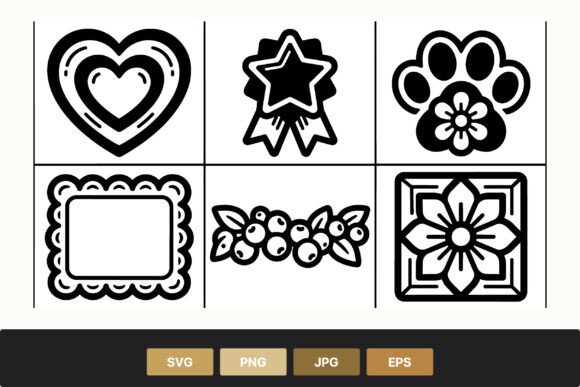
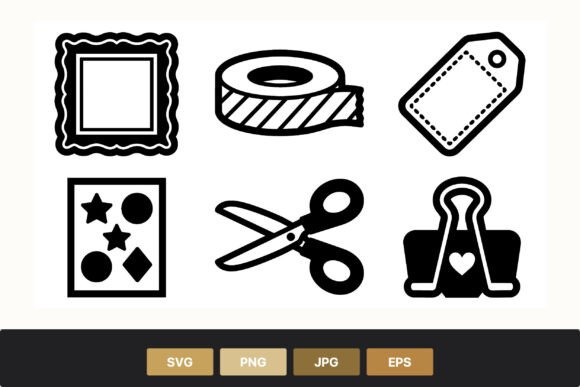
In the realm of digital design and creative production, the choice of assets often dictates the efficiency and aesthetic consistency of a project. The Crafting Tools Line Art Set represents more than just a collection of images; it is a functional toolkit designed to streamline visual communication for professionals and hobbyists alike. This vector art displays a set of black and white crafting tools including scissors, decorative tape, a heart detail binder clip, tags, and ornamental frames in line art style. By integrating these specific elements into your workflow, you can establish a cohesive visual language that resonates with audiences looking for clean, organized, and handcrafted aesthetics.
The value of this resource lies not only in its visual appeal but in its technical versatility. The download package is provided as a compressed ZIP file that conveniently bundles multiple file formats—including SVG for scalable vector editing, PNG for transparent background usage, EPS for professional design applications, and JPG for standard image compatibility—ensuring flexibility across a wide range of creative and production workflows. Understanding how to leverage these formats at different stages of a project is key to maximizing their utility.
Understanding the Role of Line Art in Visual Planning
Before diving into execution, it is essential to understand where line art fits within the broader creative process. Line art serves as a structural foundation, offering clarity without the distraction of color or complex shading. When planning a branding campaign, an educational resource, or a marketing asset, the Crafting Tools Line Art Set provides immediate visual cues that suggest organization, creativity, and attention to detail.
For entrepreneurs and small business owners, the decision to use line art often comes down to scalability and brand identity. Unlike raster images that degrade when resized, the vector nature of the SVG and EPS files ensures that whether the icons appear on a business card or a billboard, the lines remain crisp. This consistency is crucial for maintaining professional standards. The inclusion of items like a heart detail binder clip and decorative tape adds a touch of personality, allowing brands to communicate warmth and approachability while retaining a structured look.
Strategic Integration Before Project Launch
Effective implementation begins during the preparation phase. Before opening a design software application, creators should assess their specific needs regarding resolution, background transparency, and editability. If the goal is to create a series of social media graphics, the PNG format with a transparent background allows for seamless layering over various colored backgrounds. Conversely, if the project involves print production for high-end catalogs, the EPS file becomes the primary asset due to its compatibility with professional pre-press systems.
Organizing these assets before starting work prevents bottlenecks later. A practical approach involves creating a dedicated folder structure within your project directory. Place the raw ZIP file in an "Assets" subfolder, then extract the specific formats needed for the current task into a "Working Files" directory. This separation ensures that the original source files remain untouched, preserving the ability to revisit the Crafting Tools Line Art Set for future iterations or entirely new projects.
Executing Designs with Scalable Vector Assets
Once the planning phase is complete, the execution stage focuses on manipulating the assets to fit the specific narrative of the project. The SVG format is particularly powerful here because it is code-based, meaning the shapes are defined by mathematical equations rather than pixels. This allows designers to adjust stroke weights, change colors, or even modify the geometry of the scissors or ornamental frames directly within vector editing software like Adobe Illustrator, Inkscape, or CorelDRAW.
Consider a scenario where a blogger is creating a tutorial on stationery organization. They might use the heart detail binder clip from the set to highlight key points in a diagram. Because the file is editable, they can resize the clip to match the text size perfectly or alter the line thickness to ensure readability on mobile devices. This level of control is impossible with static JPEGs, highlighting why the multi-format bundle is so valuable for dynamic content creation.
Workflow Efficiency Through Format Selection
Efficiency in design workflows often depends on selecting the right tool for the job. For rapid prototyping or web development, the PNG files offer speed. Developers can drop these images directly into HTML or CSS without needing to optimize vector paths, ensuring fast load times for websites. However, if the project requires further customization, such as adding text inside the ornamental frames or combining the decorative tape with other graphical elements, switching to the SVG or EPS version is necessary.
Freelancers and agencies managing multiple clients will find this flexibility indispensable. A single purchase of the Crafting Tools Line Art Set can serve diverse needs: a marketer might use the JPG versions for quick email newsletters, while a graphic designer uses the same assets in EPS format for a printed brochure. This adaptability reduces the need to search for new assets for every minor variation in output, saving time and reducing project costs.
Enhancing Collaboration and Consistency
In collaborative environments, consistency is paramount. When multiple team members are working on a brand's visual identity, having a shared library of approved assets ensures that everyone adheres to the same aesthetic standards. The Crafting Tools Line Art Set acts as a central reference point. By distributing the ZIP file to all stakeholders, teams can guarantee that the scissors, tags, and frames used in presentations, reports, and marketing materials are identical in style and quality.
This uniformity extends to cross-platform usage. Whether the content appears on a LinkedIn post, an Instagram story, or a physical flyer, the line art style remains recognizable. This recognition builds trust with the audience. Furthermore, the black and white nature of the line art makes it neutral enough to be adapted to any color scheme required by the client or project brief, acting as a versatile canvas for creative expression.
Long-Term Asset Management and Quality Control
Looking beyond the immediate project, the longevity of digital assets is a critical factor for productivity-minded users. High-quality vector files do not become obsolete as screen resolutions increase or printing technologies evolve. By archiving the original ZIP file containing the SVG, PNG, EPS, and JPG formats, organizations secure a resource that can be utilized years down the line. This forward-thinking approach to asset management supports long-term brand evolution without the recurring cost of commissioning new illustrations.
Quality control also benefits from the precision of vector data. When scaling up designs for large-format printing, pixelation is a common risk with lower-resolution images. The vector components of the Crafting Tools Line Art Set eliminate this risk, ensuring that the intricate details of the decorative tape and the curves of the ornamental frames remain sharp regardless of the final output size. This reliability is essential for publishers and professionals who cannot afford visual defects in their final deliverables.
Practical Implementation Tips for Creators
To fully integrate this resource into your routine, consider adopting a few best practices. First, always test the assets in the intended environment before finalizing a design. Check how the line weight of the scissors looks against a dark background versus a light one. Second, maintain a master library of these files separate from your active project folders to prevent accidental deletion or modification of the source material.
Additionally, explore the potential for combining these tools with other digital resources. The tags and frames can serve as containers for quotes, testimonials, or call-to-action buttons. The binder clip and tape can function as visual anchors in infographics, guiding the viewer's eye through complex information. By treating the Crafting Tools Line Art Set as modular components rather than standalone images, you unlock endless possibilities for creative composition.
Ultimately, the power of this collection lies in its ability to bridge the gap between conceptual planning and tangible execution. It provides the necessary building blocks for creators to express ideas clearly, efficiently, and professionally. Whether you are a freelancer managing a tight deadline, a business owner establishing a new brand, or an educator designing engaging materials, the versatility and quality of these line art assets make them an invaluable addition to your digital toolkit. By understanding the strengths of each file format and applying them strategically throughout your workflow, you can achieve superior results with less friction and greater creative freedom.