Polka Dot Patterns Vector Art: A Comprehensive Guide to Seamless Black and White Designs
In the vast landscape of graphic design, few motifs possess the enduring versatility of the polka dot. From the playful aesthetics of mid-century fashion to the sophisticated minimalism of modern branding, these repeating circles have maintained a constant presence in visual culture. For designers seeking to leverage this timeless element without compromising on quality or scalability, Polka Dot Patterns Vector Art offers an indispensable resource. Specifically, a curated collection of six seamless black and white polka dot patterns provides a foundational toolkit that bridges the gap between classic style and contemporary digital production needs.
The Anatomy of Scalable Design
Understanding the technical underpinnings of vector art is crucial for anyone looking to integrate high-quality graphics into their workflow. Unlike raster images, which are composed of a fixed grid of pixels and lose clarity when enlarged, vector graphics utilize mathematical equations to define shapes. This fundamental difference makes Polka Dot Patterns Vector Art uniquely suited for projects requiring extreme flexibility in size. Whether a pattern needs to cover a billboard or fit onto a business card, the crispness of the lines and the precision of the dots remain uncompromised.
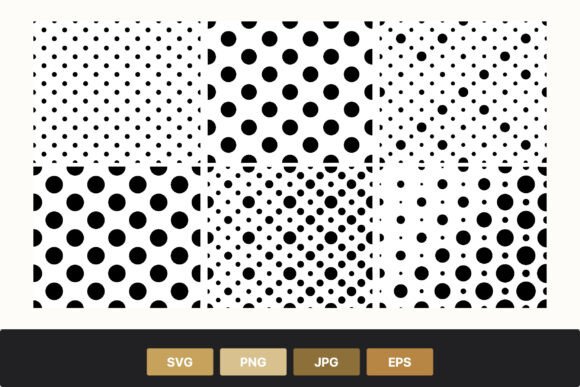
The specific collection of six seamless patterns mentioned here capitalizes on this technology. By offering files in formats such as SVG (Scalable Vector Graphics) and EPS (Encapsulated PostScript), the resource ensures that the geometric integrity of the dots is preserved regardless of the output medium. This scalability is not merely a technical convenience; it is a strategic advantage for professionals who must adapt a single asset across multiple touchpoints in a brand's visual identity.
Varying Rhythms: Dot Sizes and Spacing
A critical aspect of effective pattern design lies in the manipulation of rhythm and density. The six patterns in this collection are not identical; they feature varying dot sizes and spacing configurations. This variation allows designers to control the visual weight and texture of a surface. Large dots with wide spacing create an airy, open feel, often associated with whimsy and lightness. Conversely, small dots packed closely together generate a denser, more textured appearance that can serve as a subtle background or a bold statement depending on the contrast level.
These variations are essential for creating visual hierarchy within a layout. For instance, a designer might use a dense, small-dot pattern for a background layer to add depth without overwhelming foreground text, while reserving a large-dot configuration for accent elements like borders or headers. The ability to toggle between these different densities within a single cohesive style guide ensures consistency while preventing visual monotony.
Workflow Integration Through Multi-Format Bundling
The utility of any digital asset library is heavily dependent on how easily it integrates into existing production pipelines. The download package for this collection addresses this by bundling multiple file formats into a single compressed ZIP file. This approach eliminates the friction of format conversion, allowing creators to select the exact tool required for their immediate task without interrupting their creative flow.
- SVG Files: These are the backbone of web-based design. SVGs are code-based, meaning they are lightweight and load quickly on websites. They are also fully editable in most vector software, allowing for color changes or shape modifications directly in the browser or design application.
- PNG Files: For scenarios where transparency is required but vector editing is not, PNGs offer a robust solution. The transparent background usage capability ensures that the black and white dots can be overlaid on colored backgrounds or photographs without unsightly white boxes obscuring the underlying content.
- EPS Files: Reserved for professional design applications, EPS remains the standard for print production. It ensures compatibility with legacy systems and high-end prepress workflows, guaranteeing that the vector data translates perfectly to offset printing presses.
- JPG Files: While not ideal for editing, JPGs provide standard image compatibility for quick previews, email attachments, or use in contexts where vector data is unnecessary overhead.
This multi-format strategy ensures flexibility across a wide range of creative and production workflows. A marketing team member can drop a PNG into a social media post editor, while a print designer simultaneously utilizes the EPS file for a brochure layout, all sourced from the same original asset pack.
Strategic Applications in Branding and Marketing
The application of Polka Dot Patterns Vector Art extends far beyond simple decoration. In the realm of branding, these patterns serve as powerful tools for establishing recognition and conveying specific emotional tones. The stark contrast of black and white polka dots communicates clarity, confidence, and a nod to retro-modernism. This aesthetic has been adopted by diverse industries, from high-end fashion labels seeking a chic, vintage appeal to tech startups aiming for a clean, structured look.
Print and Packaging Solutions
In the physical world, the seamless nature of these patterns is particularly valuable for packaging design. Wrapping paper, gift bags, and product boxes often require patterns that tile infinitely without visible seams. The six distinct variations in the collection allow packaging designers to match the dot density to the size of the product. A small cosmetic jar might benefit from a fine, tight dot pattern that suggests delicacy, whereas a large tote bag could utilize a bold, widely spaced pattern to make a striking visual impact from a distance.
Furthermore, the black and white color scheme offers significant cost advantages in printing. By utilizing only one ink color (plus the substrate), businesses can reduce printing costs significantly compared to full-color CMYK runs. This efficiency makes vector polka dot patterns an economically viable choice for small businesses and startups looking to produce professional-grade packaging without breaking the budget.
Digital Interfaces and Web Design
On the digital front, these patterns enhance user interfaces by adding texture and reducing visual fatigue. Flat design, while popular, can sometimes feel sterile. Introducing a subtle polka dot background can break up large areas of negative space, guiding the user's eye and adding a layer of sophistication. Because the assets are available in SVG, web developers can implement them as CSS backgrounds, ensuring they scale perfectly on mobile devices, tablets, and desktop monitors alike.
Consider a landing page for a boutique event planning service. Using a large-dot pattern as a section divider can create a sense of celebration and fun, while a smaller dot pattern used behind text blocks can improve readability by providing a slight contrast against a solid white background. The versatility of the vector format means these elements can be animated or interacted with using JavaScript, opening up new possibilities for dynamic web experiences.
Creative Considerations for Educators and Hobbyists
Beyond commercial applications, Polka Dot Patterns Vector Art holds immense value for educators and hobbyists. In educational settings, these patterns serve as excellent teaching tools for concepts related to geometry, repetition, and symmetry. Teachers can use the editable vector files to demonstrate how changing a single variable, such as the radius of a circle or the distance between nodes, alters the entire composition. This hands-on approach demystifies the mechanics of digital design for students.
For hobbyists engaged in scrapbooking, card making, or DIY home decor, the availability of high-resolution PNGs and JPGs simplifies the creation process. No longer bound by the limitations of low-resolution clip art found on generic stock sites, crafters can print these patterns at poster size or cut them out for intricate paper crafts. The seamless nature of the designs ensures that even when printed on irregular shapes or folded materials, the pattern aligns correctly, maintaining a professional finish on personal projects.
The Enduring Appeal of Monochrome
The decision to focus on black and white patterns is a deliberate artistic choice that maximizes utility. Color trends fluctuate rapidly, but the interplay of black and white is perennial. By providing a monochromatic foundation, this collection empowers users to inject their own color palettes during the editing phase. A designer can take a black-and-white vector file and instantly recolor the dots to match a client's brand guidelines, shifting from a corporate blue to a vibrant coral in seconds.
This adaptability makes the collection a future-proof investment. As design trends shift towards maximalism or minimalism, the core structure of these polka dot patterns remains relevant. The simplicity of the form allows it to coexist with complex typography, photographic imagery, and other graphical elements without creating visual chaos. It acts as a neutral yet engaging canvas upon which other design decisions can be built.
Implementation Best Practices
To maximize the potential of these assets, users should adhere to best practices regarding file management and usage. When working with the ZIP package, it is advisable to organize the extracted files into a dedicated folder structure based on project type. Keeping the master SVG and EPS files separate from the flattened PNG and JPG versions prevents accidental overwriting and ensures that the editable source material is always available for future revisions.
When integrating these patterns into a larger design system, consistency is key. Selecting two or three patterns from the set of six to establish a primary and secondary visual language helps maintain cohesion. Overusing all six patterns simultaneously can lead to a cluttered and disjointed aesthetic. Instead, treat each pattern as a distinct tool in a toolbox, deploying it strategically where its specific density and rhythm best serve the communication goal.
Ultimately, the value of Polka Dot Patterns Vector Art lies not just in the visual appeal of the dots themselves, but in the freedom they grant the creator. By removing technical barriers through scalable formats and versatile file types, these assets allow professionals and enthusiasts alike to focus on what matters most: the story they are telling and the impact they wish to make. Whether applied to a global advertising campaign or a handmade greeting card, the seamless integration of these patterns elevates the final result, proving that sometimes, the simplest shapes hold the most profound power.